- Introduction
- Chapter I: My Family and My Town
- Chapter II: Deportation
- Chapter III: Amnesty
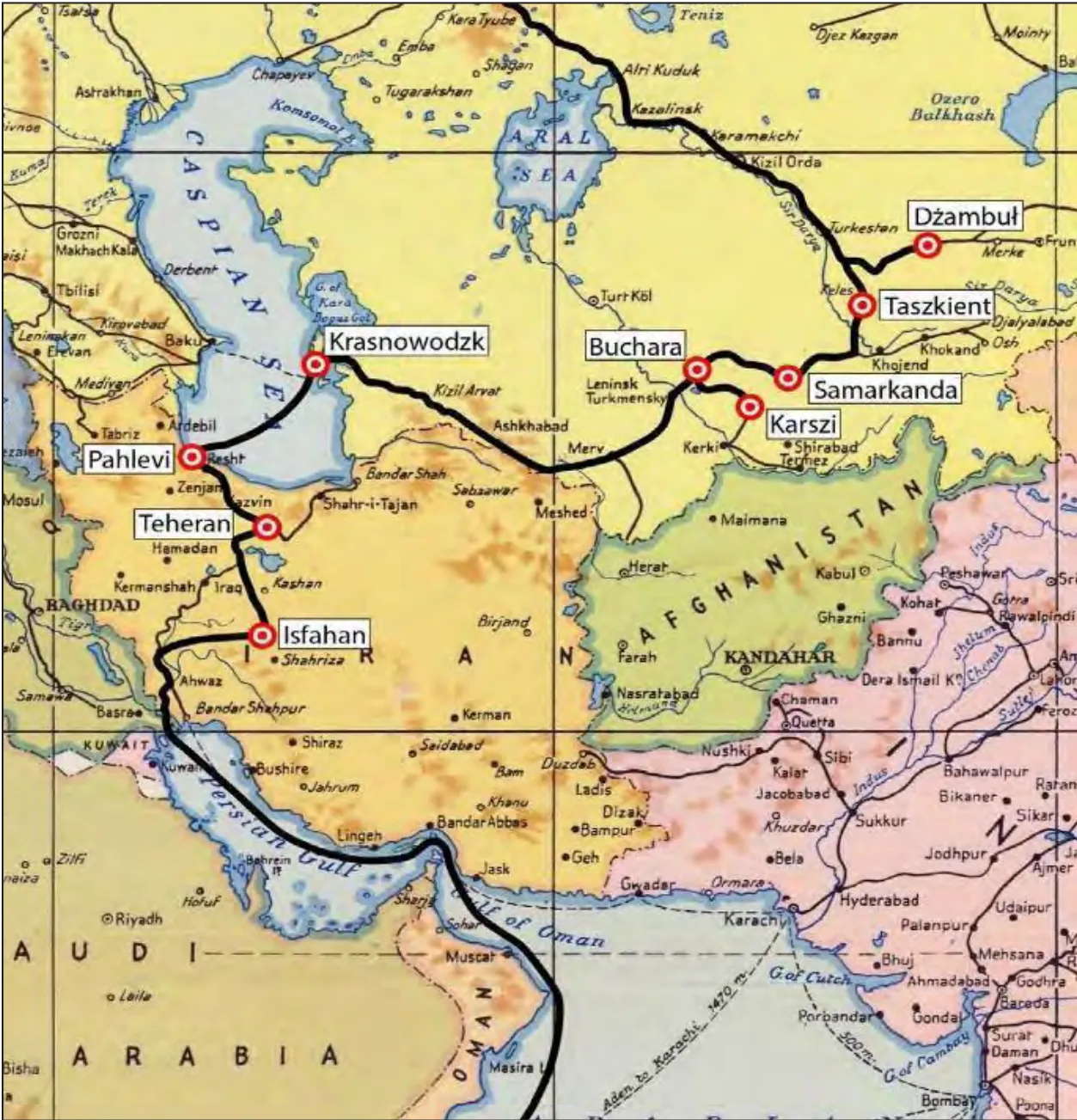
- Chapter IV: The Journey to Kazakhstan
- Chapter V: In Dzhambul
- Chapter VI: In Iran
- Epilogue
Chapter VI
In Iran
Pahlavi, Tehran, Isfahan, Africa, 1942–1947
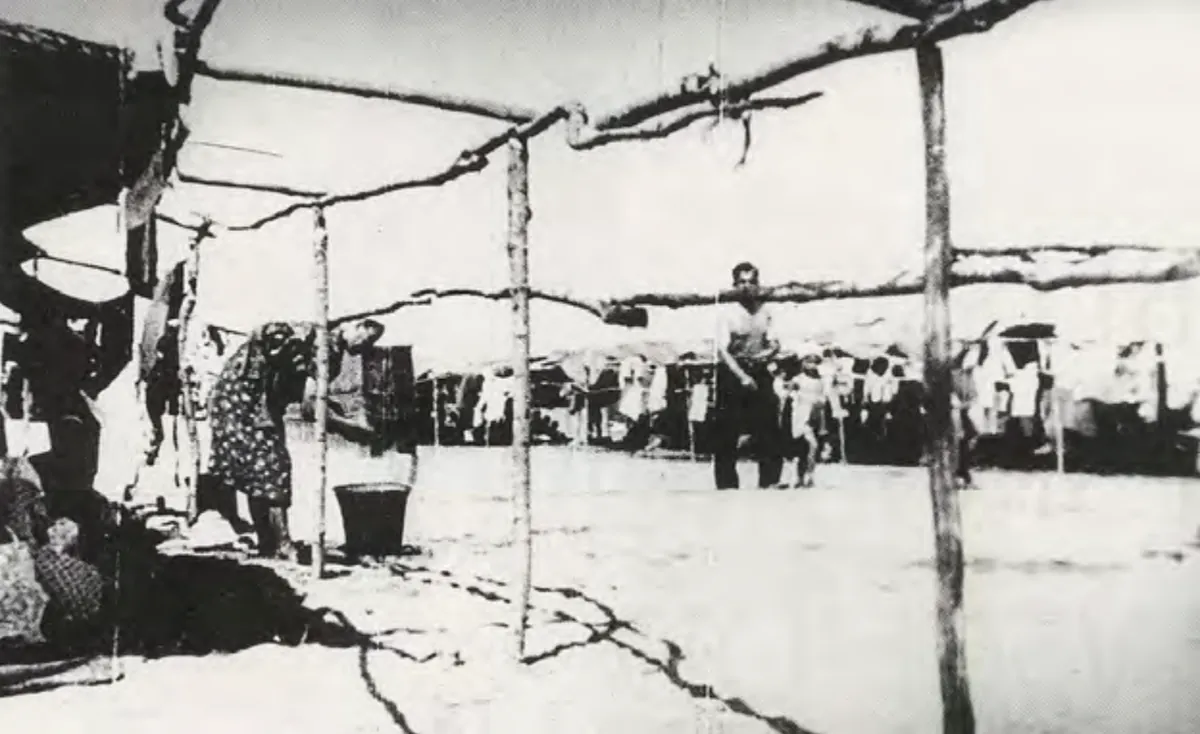
On 27 August 1942, around noon, we sailed into the port of Pahlavi on Iranian soil. In later years the Iranians renamed the town Bandar-e Anzali. The disembarkation of passengers was exemplary in its organisation. People coming off the ship onto the quay were immediately directed to waiting army lorries, which set off as soon as they were loaded. We too climbed up the steps provided onto a lorry fitted with benches, and it set off at once. After a short drive we reached our quarters, a huge camp on the sandy beach of the Caspian Sea. We found ourselves in the civilian sector, where, parallel to the shore and a few dozen metres from it, long rows of shelters roofed with mats against the sun had been put up, and under these shelters the people arriving from the port took their places on the sand, family next to family. Many thousands of civilians were already camped in these shelters, and we joined them. In the other part of the beach was the military sector, where the soldiers were quartered in tents. The junaks, uniformed young people aged fourteen to eighteen, were quartered there too, as well as women's units of the organisation called the Women's Auxiliary Service, the so-called “pestki”. This huge camp, which occupied three kilometres of beach on the eastern side of the town, was fenced off from the outside by a low fence, beyond which one could come across jackals, which were in the habit of visiting the camp at night in search of food.
This second stage of the evacuation lasted from 8 to 30 August 1942. We managed to leave on 27 August, near the very end. In the August evacuation 45,000 soldiers and 25,500 civilians left for Iran, 70,500 people in all. Altogether, in the first and second stages, 114,500 people left the USSR, 78,000 of them soldiers and 36,500 civilians11. If we compare this figure of 114,500 with the total number of amnestied people, 389,04112, we find that only 29 per cent of those amnestied managed to be evacuated to Iran.
Those who remained in the Soviet Union had to wait for the end of the war working in kolkhozes or factories, and some joined Berling's army and fought against the Germans alongside the Red Army.
We, meanwhile, on the beach at Pahlavi, enjoyed beautiful summer weather. The sea was warm and many people went bathing. But the waves were big, and some bathers ignored this, swam out too far and could not get back to shore; there were several drownings. Most important was that we had an army kitchen close by, which supplied rich, high-calorie meals from the cauldron. But this rich food did not agree with everyone, for people were undernourished and soon began falling ill en masse, probably from overeating. Their stomachs could not cope with such good food. We, on the other hand, had great privileges at our field kitchen, because its head was Mr Szkoda, a former neighbour of Father's from Polesie, from the time when Father worked there as district forester in 1930–1934; Szkoda had been a military settler with a farm near us. Our transit camp at Pahlavi was fenced off from the town and we had no contact with the local people, but Persian traders constantly appeared selling various fruits, including pomegranates, unknown in Poland.
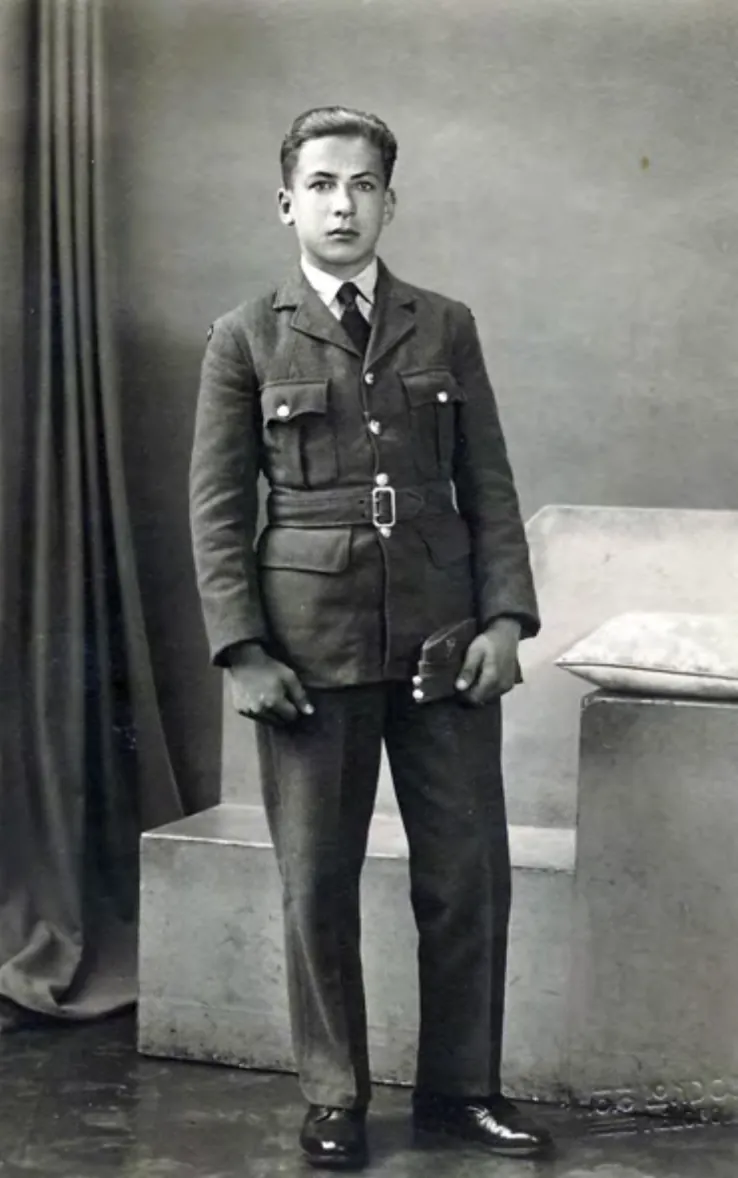
Right at the beginning my Brother and I joined the junaks, the army's youth units. I would not turn fourteen until October, but nobody there asked for a birth certificate, since hardly anyone could produce one. As a fourteen-year-old I was put in the fourth company, and my brother, at fifteen, in the third. As my uniform I was given a British battledress, far too big for me, because in almost three years in the USSR I had hardly grown, and in height I resembled an eleven-year-old. I fastened the army trousers I was issued with a belt high up, somewhere under my armpits. There were no uniforms for soldiers of small stature. We were quartered on the beach in the military sector, with only a shelter overhead that protected us from the sun but not from rain, and we slept on blankets spread on the sand. My good friend in the company turned out to be Adam Szkoda, the son of the head of the field kitchen in the civilian sector, who had known my Father before the war, as I wrote earlier. Adam and I marched together and slept side by side in our shelter. Adam was the same height as me and also had trouble wearing a uniform that was far too big. Our fourth company was commanded by a platoon sergeant, a pre-war NCO who gave orders in a mighty voice and who was assisted by a corporal, a very calm and even-tempered man. With this corporal we marched endlessly up and down the beach, performing various turns as part of our drill and practising our marching step. The command would come: “Fours, right turn! Forward march!” and the company would start marching. Then the command: “Company, sing!” and we sang the songs the corporal had taught us. Quite often our fourth company of fourteen-year-old warriors sang this song:
Nie ma wesela, nie ma muzyki, żeby nie było panny Ludwiki!
Panna Ludwika, klawa kobita, każdemu buzi da!
(There's no wedding and no music without Miss Ludwika!
Miss Ludwika, a smashing girl, gives everyone a kiss!)
I felt fine as one of General Anders's soldiers until I was struck by a very unpleasant illness, bloody flux, also called dysentery. I went on taking part in the marches, but my condition grew steadily worse. On top of that the good weather ended and the rains began. As soldiers we were better off than the civilians in that we had rubber rain capes, which we hung over our heads, while the civilians got wet, because the sun mats over their heads gave no protection from the rain. My symptoms became so bad that I ended up in hospital. The hospital was also on the beach, in a separate part of the military sector, and the sick lay in large tents on iron beds set close together in two rows in each tent. My first contact with the doctor went like this. The doctor asked: “What's the matter with you?” I replied: “I have bloody dysentery.” And he said: “And where is the blood coming from?” I could not find the right word, so I said nothing, but I realised the doctor was trying to cheer me up. I spent about a week in that hospital, and when I had recovered somewhat I was taken with other patients, in a larger group, to Tehran, the capital of Iran. By the end of September the transit camp at Pahlavi was being wound up. The civilians went from Pahlavi to Tehran, and the army to Iraq. A reminder of the Poles' stay at Pahlavi is the cemetery where 639 people evacuated from the USSR are buried. That is how many were lost of the 114,500 evacuated in all in March, April and August 1942.
At the end of September my brother left Pahlavi for Tehran with his junak company, and after a short stay there he went on to Palestine, from where he was transferred to Egypt, where he was admitted to the Air Force Technical School at Heliopolis near Cairo. The school followed the curriculum of four years of gymnasium and two of lyceum, extended with aeronautical subjects. He attended it for four years, and at the end of 1946, when the school was closed down, he went to England, where after the war he served for another two years in the RAF (Royal Air Force), until the end of 1948, when his military service ended. He settled permanently in Derby in England. In 1998 Zbigniew Bachmiński was awarded the Cross of Combat Action of the Polish Armed Forces in the West by the President of the Republic of Poland.
I left Pahlavi for Tehran on 25 September 1942 with other hospital patients. We travelled by bus over the high Alborz mountains, along the road of “a thousand bends”. After the first day we stopped for the night in Qazvin. We were all put in one great hotel hall with no beds, only Persian carpets, on which, following Persian custom, we were to sleep side by side. After spending the night there we set off again and finally reached Tehran. Here I found myself in a large Polish hospital on the outskirts of the city. There were a great many Polish patients in the hospital, and what caught my attention most were some of them shuffling around the hospital courtyard, so emaciated that their skeleton-like figures stood out. The death rate among Poles in Tehran was high, as shown by the 1,937 Polish graves in the Dulab war cemetery. My stay in hospital lasted another ten days or so. I did not return to my junak company, because Mother decided to have me withdrawn to civilian life, and on leaving hospital I found myself in Polish Camp No. 2 on the outskirts of Tehran, near a military airfield. Living conditions in Camp No. 2 were primitive: we lived in hut-like shelters with no floor, just beaten earth, on which the families crowded side by side, sleeping on blankets spread on the ground. I started going to school, in the sixth year. The school was in the open air: we sat on planks laid on bricks, but there was a blackboard, which showed that it was a real school. Being next to the airfield was very exciting for me, because I could watch the constant aerobatics over the airfield. They were biplane fighters, not very modern, but their aerobatics were beautiful. An important event during our stay in Tehran was the visit to Camp No. 2 of the Field Bishop, Józef Gawlina, who administered confirmation to a large group in the open air on the square. I also remember that for a few days shots could be heard in the city. Nobody dared go into the city to see what was happening. In our camp the explanation was that these were riots caused by Kurds, who were staging demonstrations in the capital that turned into exchanges of fire with the army, the aim of these demonstrations being to demand autonomy for the Kurdish people living within Iran's borders.
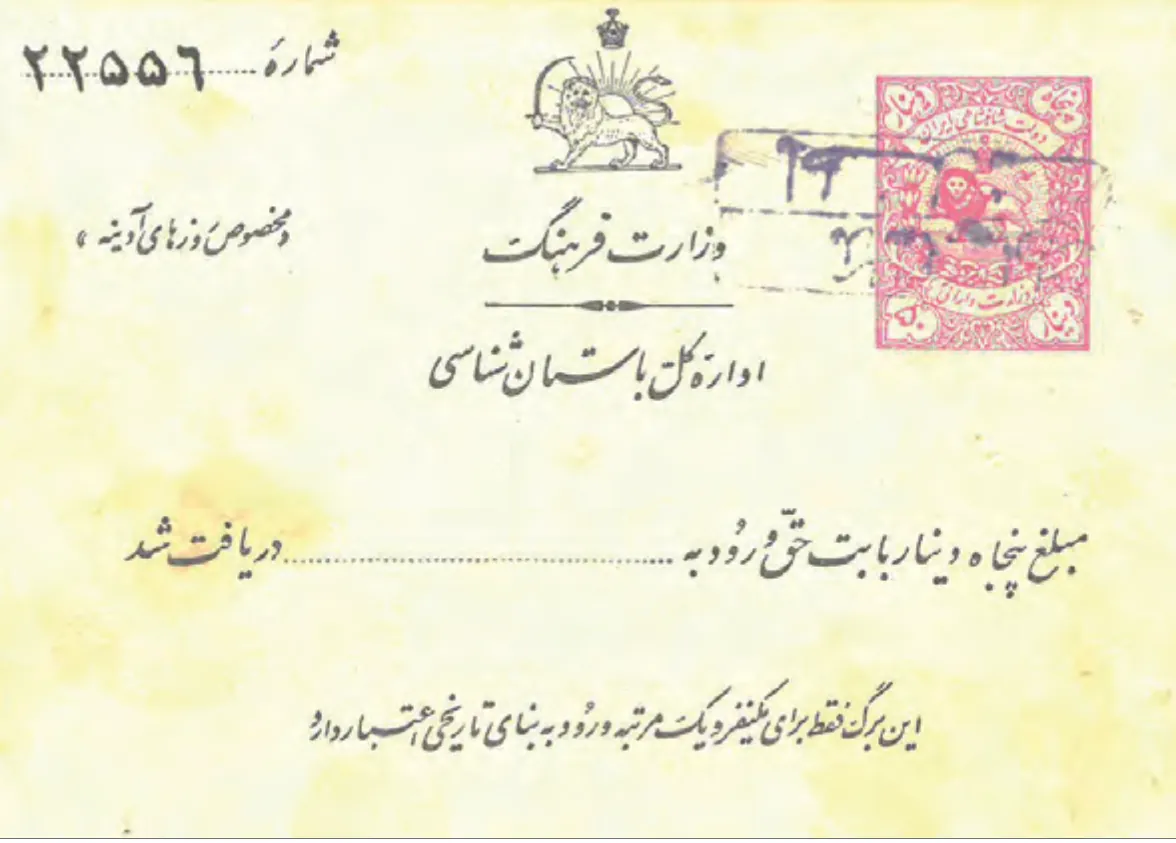
During our stay in Tehran, Mother and I tried to see the city and observe how the Persians lived. Looking east from the city one saw the mighty peak of Damavand, 5,604 metres high, towering over the city under a white cap of snow and ice. Several times we went to the city centre, to the main street, Lalezar, looked at the shop windows, and also went into a mosque and admired its beautiful architecture. We stayed in Tehran for about three months, until we left for Isfahan, where Mother had been engaged as a teacher at one of the institutions housing Polish orphans.
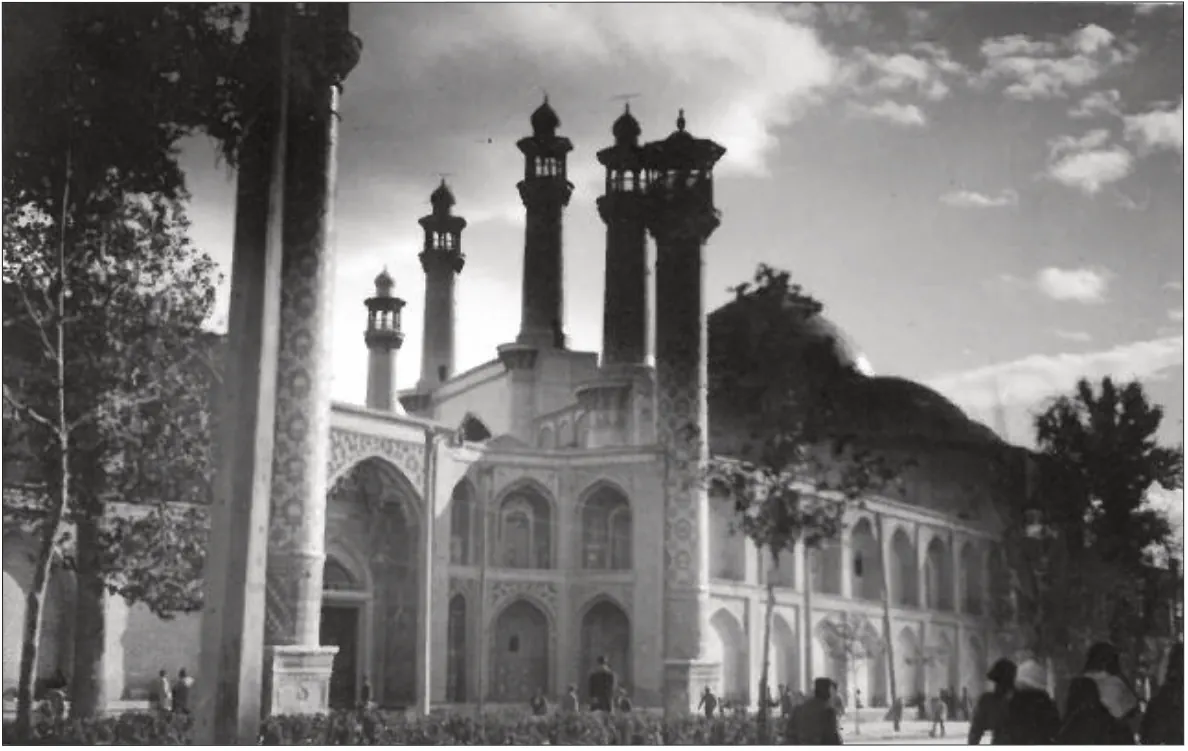
I remember the journey to Isfahan quite well. We had over 500 km to cover by bus, stopping several times at roadside places where, behind high walls, there were chaikhanas, or teahouses. Our driver took the opportunity to smoke a nargile, a water pipe, in the chaikhana. Some of our fellow travellers feared that the water pipe might contain a drug and that after smoking it the driver would cause an accident. We drove through a barren upland country on a road without many bends, and the driver, as it turned out, had no trouble driving the bus after smoking his nargile and brought us safely to Isfahan.
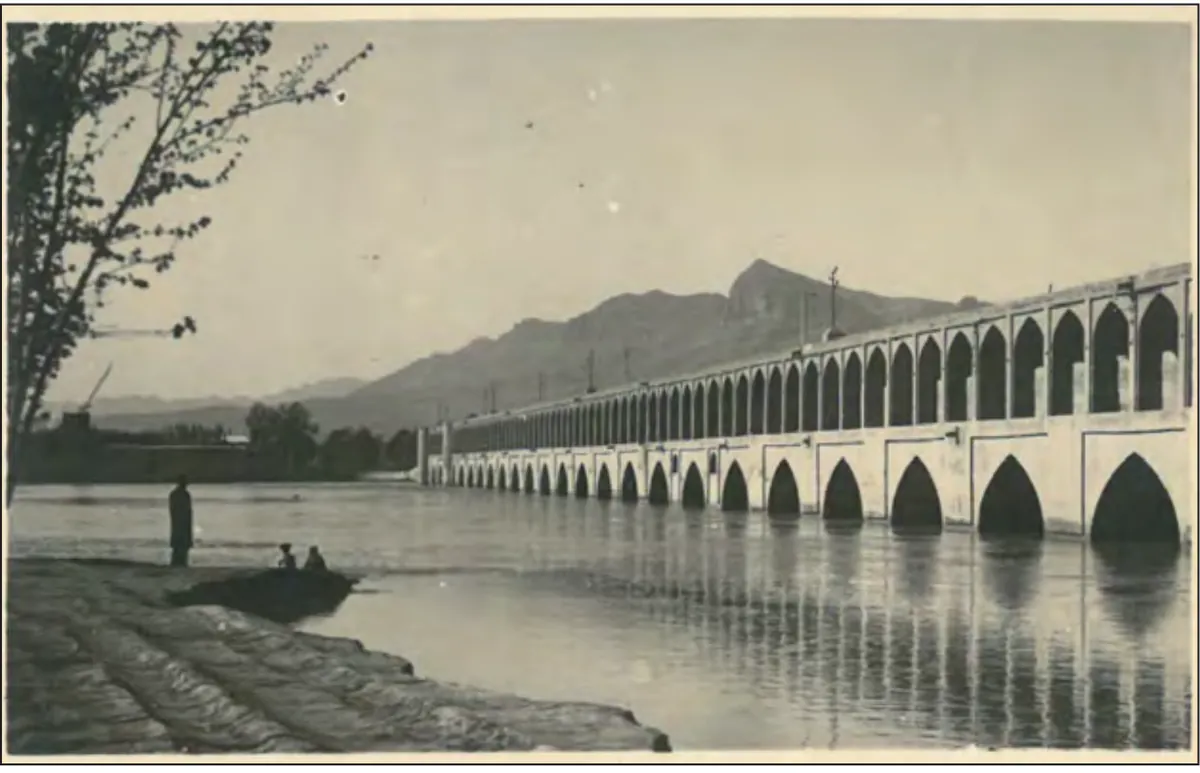
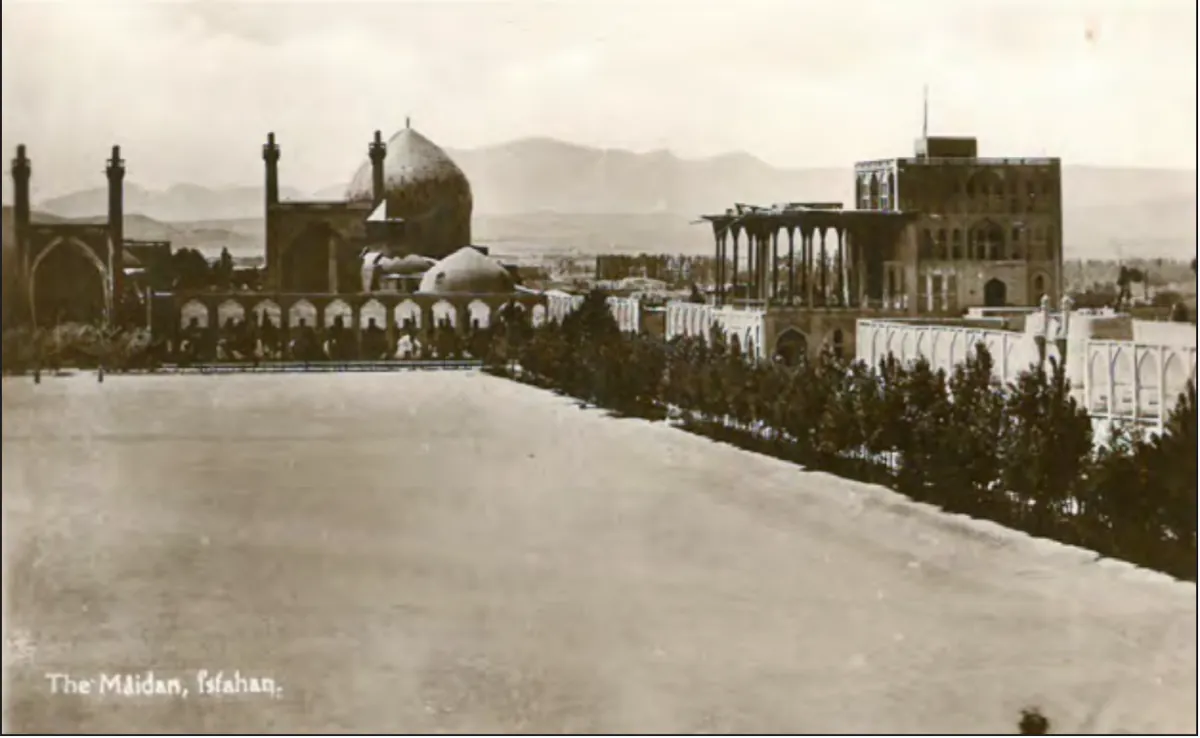
Isfahan was a large city with 250,000 inhabitants. It was a city of many mosques, with a historic 33-arch bridge over the Zayanderud River linking the centre with the Armenian quarter, Julfa. I lived with perhaps forty boys in Julfa, in a large single-storey residence surrounded by a high wall. Who owned the residence and lent it to us for our temporary stay I cannot say. About 2,700 of our refugees, mostly young people, ended up in Isfahan. They lived in private villas, religious houses and military buildings. It was a very helpful gesture on the part of the Iranian state and people that so many of our refugees could be housed in buildings of quite a good standard. I began the first year of gymnasium, “skipping” the sixth year of primary school, which I had attended in Tehran for only two months. My gymnasium was in Julfa, not far from where I lived. Mother was a teacher at an institution in the city centre, and I often visited her, crossing the 33-arch bridge to the other side of the river. Together we explored the city, visited several mosques and admired, among other things, the work of the local craftsmen making silver objects that were masterfully engraved. I still have a souvenir of Isfahan: Father's silver cigarette case, which we gave to those masters to engrave. We were intrigued by the Persian carpets displayed for sale in many places. Since Mother had a modest teacher's salary, we had a few tomans for small expenses, and even for buying an engraved silver bracelet. I should add that throughout our stay in Iran and afterwards our basic food was free, so earnings from work could go on personal expenses. Everywhere in the street they sold lepyoshki, a kind of flatbread made of dark flour, which we often bought because they were cheap and tasty. Of the fruit, we most liked buying pomegranates and dried dates. The covered bazaar in Isfahan, stretching for more than a kilometre, was sensational: it had countless shops and stalls with all sorts of goods, and there was a great hubbub and noise, as the sellers loudly praised their wares, and the noise was heightened by craftsmen in their workshops hammering sheet metal.
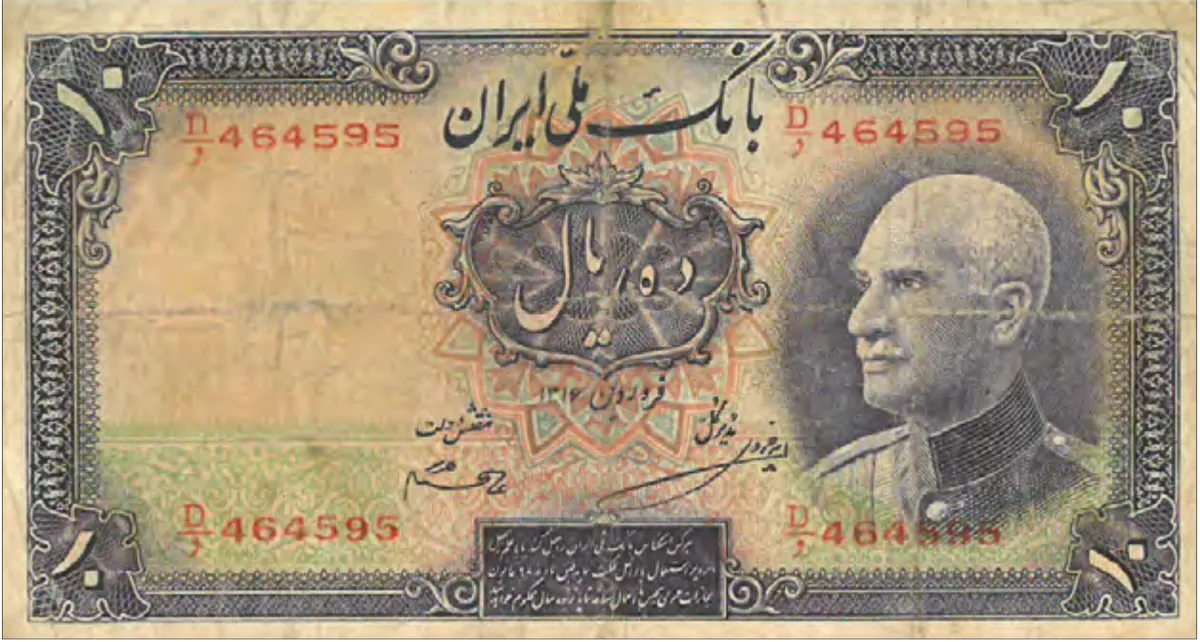
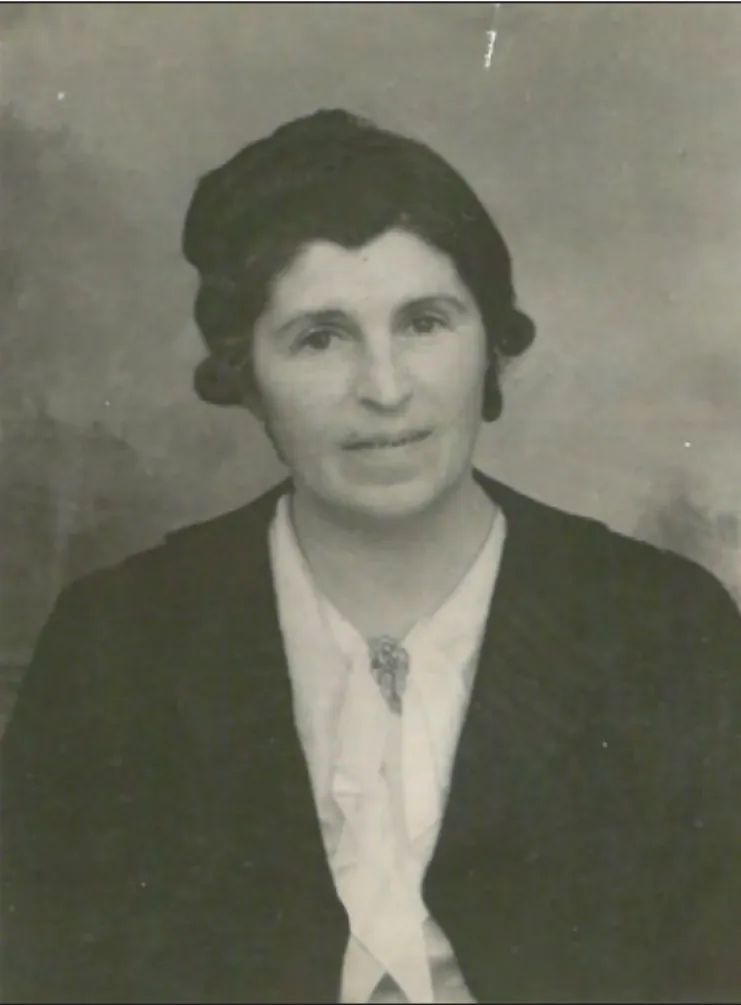
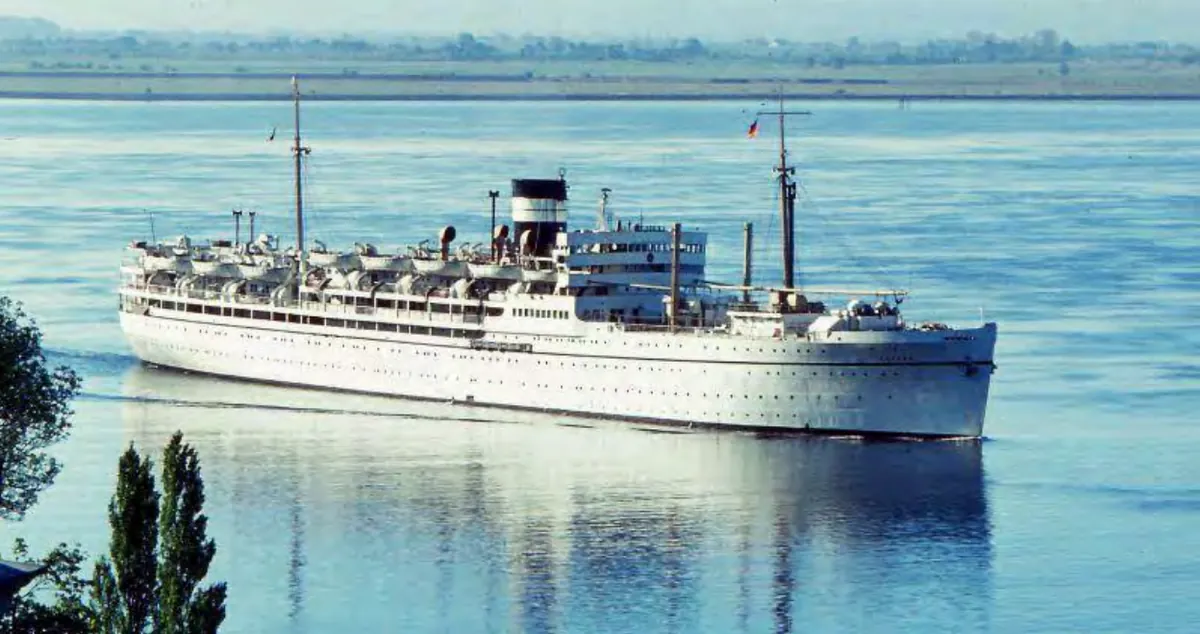
Our stay in Isfahan was short, only seven weeks. It was decided that we were to leave with a group of five hundred Polish children for the Union of South Africa. Around the middle of February 1943 we left Isfahan by bus northwards to the city of Qom, from where there was a rail connection to Ahvaz, a city in southern Iran near the Persian Gulf, where we were to wait for the ship that would take us to Africa. In Qom there was a three-day break in the journey while we waited for a train to Ahvaz. We were put up in a hotel and had time to see the city. Qom is a beautiful oriental city, and the most striking example of Islamic architecture there was a historic mosque with a golden dome. Our journey from Qom to Ahvaz was by night train and was exceptionally tiring, because we were crammed into a compartment and sleep was out of the question. We travelled through the high Zagros range, and at sunrise the train stopped at a small station, where I got out to admire the beautiful mountain scenery. Besides the beauty of the mountains lit by the rising sun, I saw several Persians get off the train, spread their prayer rugs and, facing Mecca, bow down to Allah. It was a scene worth remembering. We arrived safely in Ahvaz, where there was a transit camp for Poles waiting to leave for Africa and India. 18,000 people left Iran by sea for Africa, and 4,500 for India13. Our stay in Ahvaz lasted 18 days, until word came that a ship was waiting for us in port. Then we set off by train to the port of Khorramshahr on the Shatt al-Arab. This river is the final stretch of the Euphrates and the Tigris, two rivers that join about two hundred kilometres before the Persian Gulf to form a single stream called the Shatt al-Arab. The river here is deep enough for ocean-going ships. In port the large passenger ship Dunera was waiting for us; a group of 1,032 Poles boarded her, and on 3 March 1943 we left Iran. Our stay in Iran had lasted half a year.
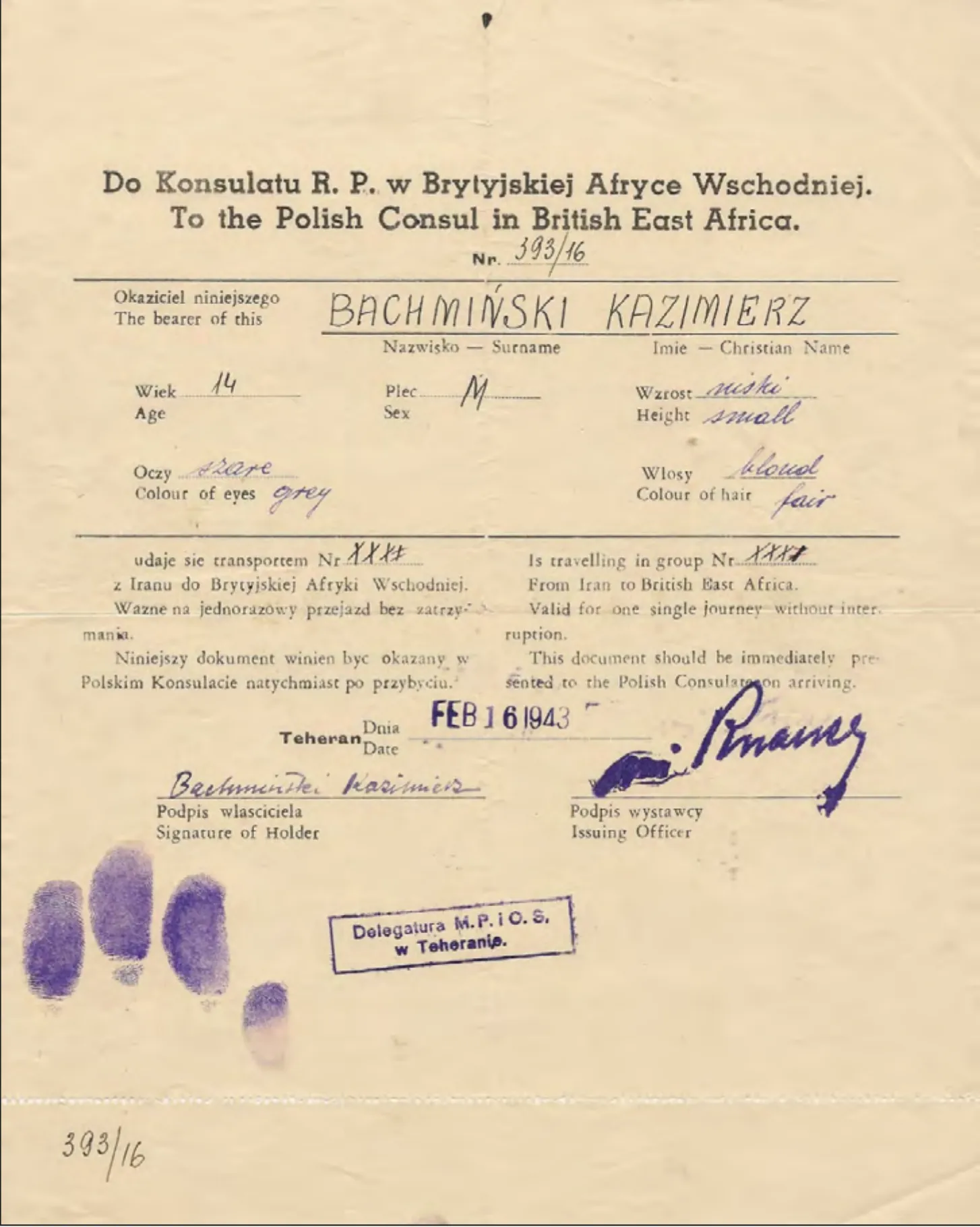
Sailing down the Shatt al-Arab we had unforgettable views: on both sides of the river there was a great palm forest. Soon we reached Abadan, where we stopped to take on fuel oil for the onward voyage. After leaving the port of Abadan we soon reached the Persian Gulf, and sailing down the Gulf we reached the Strait of Hormuz. In the Strait there was a stop of several days, because numerous ships were gathering there to set out into the Indian Ocean in convoy, escorted by destroyers.
Forming a convoy with a destroyer escort was necessary because German and Japanese submarines were prowling the Indian Ocean. In the Strait one of our passengers spotted the Polish ship Kościuszko, which caused great emotion, for we saw in her a piece of our Homeland, but it was not possible to make contact with her crew. At last the convoy set off, but our Dunera sailed with it for only a few days, because the convoy of several dozen ships headed south-east towards India, while the Dunera set course for Africa alone. Our ship often sailed a zigzag course so as not to leave a clear wake, which might tell a submarine that there was a target to torpedo nearby. The Dunera was quite well armed: she had a large-calibre gun on the stern with which to defend herself against submarine attacks, and two twin anti-aircraft gun positions, which could also be used to fire on submarines. During the voyage there were several test firings of the gun at unwanted crates thrown overboard, and of the anti-aircraft guns at small balloons released into the air. Every day there was a practice alarm, for which we turned out in lifejackets. We also had constant musters on deck and drills led by a naval officer on what to do if we were torpedoed. On the ship I had a place in third class, which meant sleeping in a hammock and washing under a saltwater shower. Our ship called briefly at Mombasa, Beira and Durban. The port of Mombasa made the greatest impression on me; it was there that I had my first contact with “black” Africa. At Beira, a port in Portuguese Mozambique, a group of 513 Poles went ashore, whose final destination and place of permanent residence was to be Lusaka in Northern Rhodesia (Zambia). The last stretch of the voyage, from Durban to Port Elizabeth, was through waters threatened by German submarine attack, and we could guess at this danger, because all the while we were patrolled by an aircraft that accompanied us and watched the ocean waters. We arrived safely at Port Elizabeth in the Union of South Africa, and that was the end of our sea voyage, which had lasted four weeks. For nine days we stayed on board without being able to go ashore, because we had to undergo quarantine, during which we were checked for any infectious disease we might have brought with us.
Our first place of residence was the town of Oudtshoorn in the Union of South Africa, where our group of 500 children and young people, who had come on the Dunera to Port Elizabeth together with a team of 29 teachers and carers, ended up. At the beginning of 1944 I left the Union of South Africa with Mother and my Sister for Northern Rhodesia (Zambia). During our stay in Northern Rhodesia Mother worked as a primary school teacher in the Polish settlement at Lusaka, while I attended the second year of the Polish gymnasium in Livingstone and then continued at the gymnasium and lyceum in Lusaka, and in 1947 passed my school-leaving examination. My sister meanwhile attended primary school. In June 1947 our more than four years in Africa came to an end, as we had decided to return to Poland. The story of the Poles in Africa is interestingly told by Wacław Korabiewicz in his book Gdzie słoń, a gdzie Polska (Where the Elephant Is, and Where Poland), which also includes extracts from the memoirs of my Mother and myself (pp. 70–73). My friend from Rhodesia, Eugeniusz Zaliński, also described our stay in Africa at length in his book Z Polski do Polski. Przez Syberię, przez Afrykę (From Poland to Poland: Through Siberia, Through Africa). These books are well worth reading, as they tell the story of the Poles who, after a short stay in Iran, found themselves in Africa. I decided not to continue with an account of my adventures in Africa, because my main intention was to describe only this dramatic period of our exile, ending with our happy departure from the territory of the USSR, our half-year stay in Iran and our voyage to South Africa. We returned home to Poland on 25 July 1947, after almost seven and a half years of wandering.
Notes
- Norman Davies, Szlak nadziei (Trail of Hope), 2015, p. 177. ↩
- Deportacje obywateli polskich z Zachodniej Ukrainy i Zachodniej Białorusi w 1941 roku, Institute of National Remembrance, 2003, p. 707. ↩
- Wacław Korabiewicz, Gdzie słoń a gdzie Polska, Ministry of National Defence Publishing House, 1980, p. 174. ↩