- Introduction
- Chapter I: My Family and My Town
- Chapter II: Deportation
- Chapter III: Amnesty
- Chapter IV: The Journey to Kazakhstan
- Chapter V: In Dzhambul
- Chapter VI: In Iran
- Epilogue
Epilogue
Wołkowysk, 1999 and 2016
In conclusion I would like to offer a few reflections and facts about the post-war period. By chance my Mother found Mrs Jadwiga Wróblewska, who had returned home from India and settled in Gdańsk. She often visited us in Wrocław, and whenever one of us was at the seaside we visited her in Gdańsk. We liked talking about our time together at Katiszcze and in Dzhambul, thanks to which various details and names have stayed fixed in my memory, and I have included them in my Memoirs.
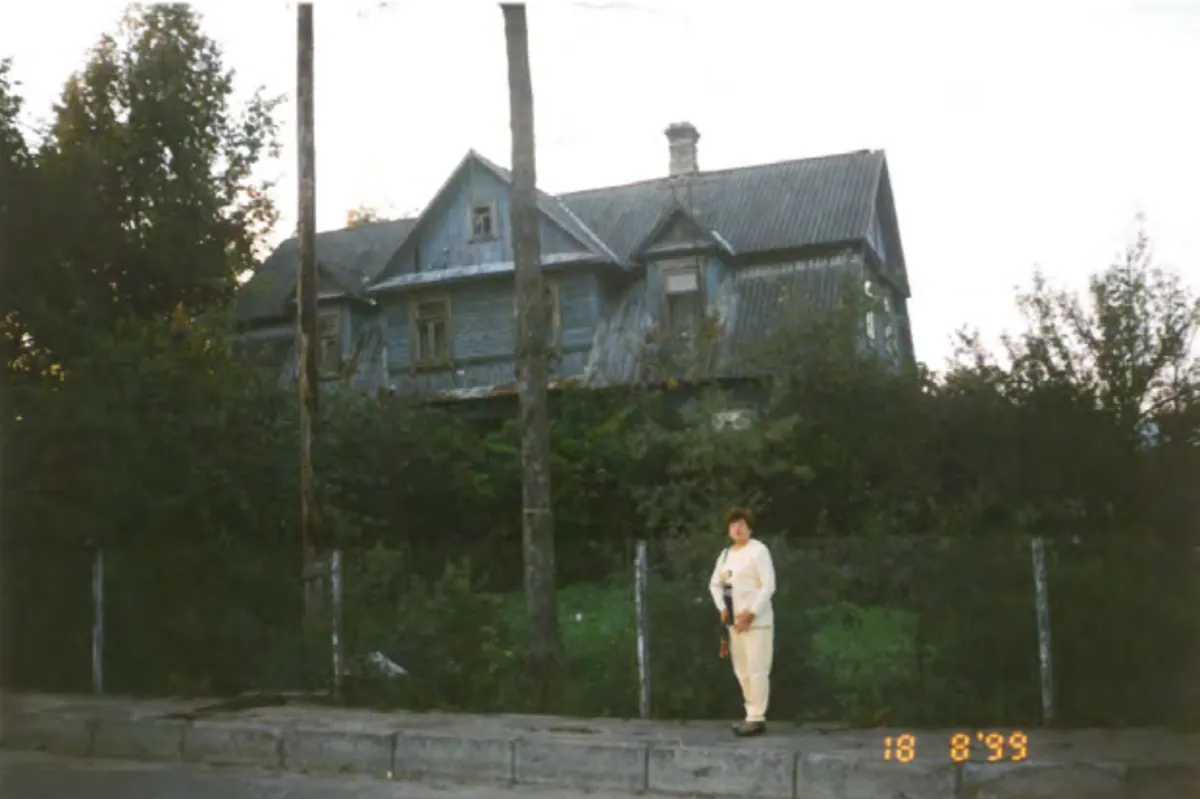
I very much wanted to visit my town, Wołkowysk, from which we were deported on 10 February 1940. The first opportunity came only in 1999, and the next visit took place in 2016. I made the first trip with my wife, Alina, by coach from Wrocław to Grodno, and from Grodno to Wołkowysk by local bus. The hotel in the town centre was well below European standards, which forced us to cut our stay short. We visited the house at 5 Karczyzna Street (now 19 Moprauskaja Street), our first home in Wołkowysk in 1935–1936. We talked with one of the tenants of the house. He knew the name of the pre-war owner, Gołgowski, and said that someone from the Gołgowski family had come from Poland a few times to look at the house, to which Gołgowski had lost his title when he left Wołkowysk for Poland in 1945. How the house looked in 1999 can be seen in the attached photograph. The façade looks rather shabby.
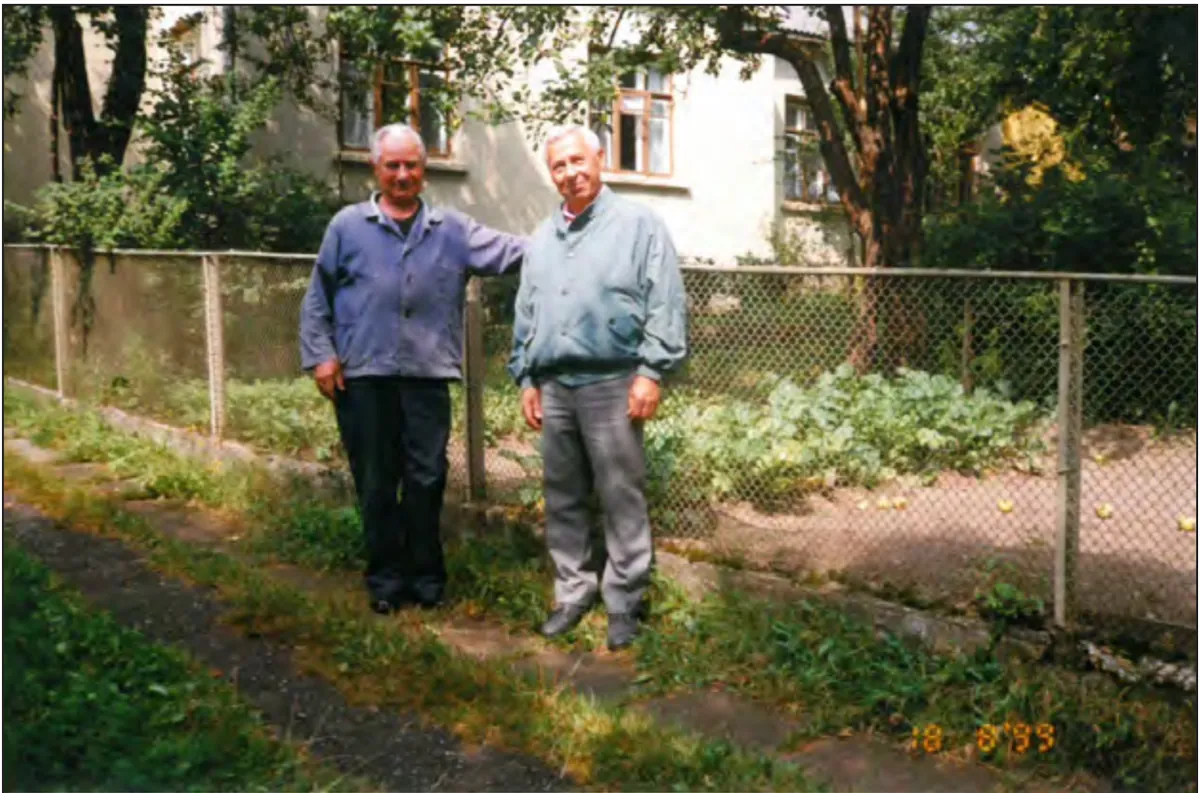
We also visited the house at 40 Wileńska Street, where we lived from 1936 to 1940. I talked with a Russian who lived in the flat occupied before the war by Mr Zalewski, the owner of the house. The Russian, Ivan Grigoryevich Bashkirev, invited us into his flat and told us his story: during the war with Germany he had served in the anti-aircraft artillery, and after the war he had stayed in Wołkowysk, where there were flats left empty by Poles resettled to Poland. Ivan Grigoryevich invited us to a party the next day, which never took place, however, because we decided to go home on account of the dreadful conditions in the hotel. I also tried to visit my school friend, Władek Gabrowski, who lived next door at 38 Wileńska Street, but unfortunately nobody came out of the house, although Ivan Grigoryevich had told us that his neighbour Volodya lived there in that pre-war house. I was very sorry that the meeting did not happen.
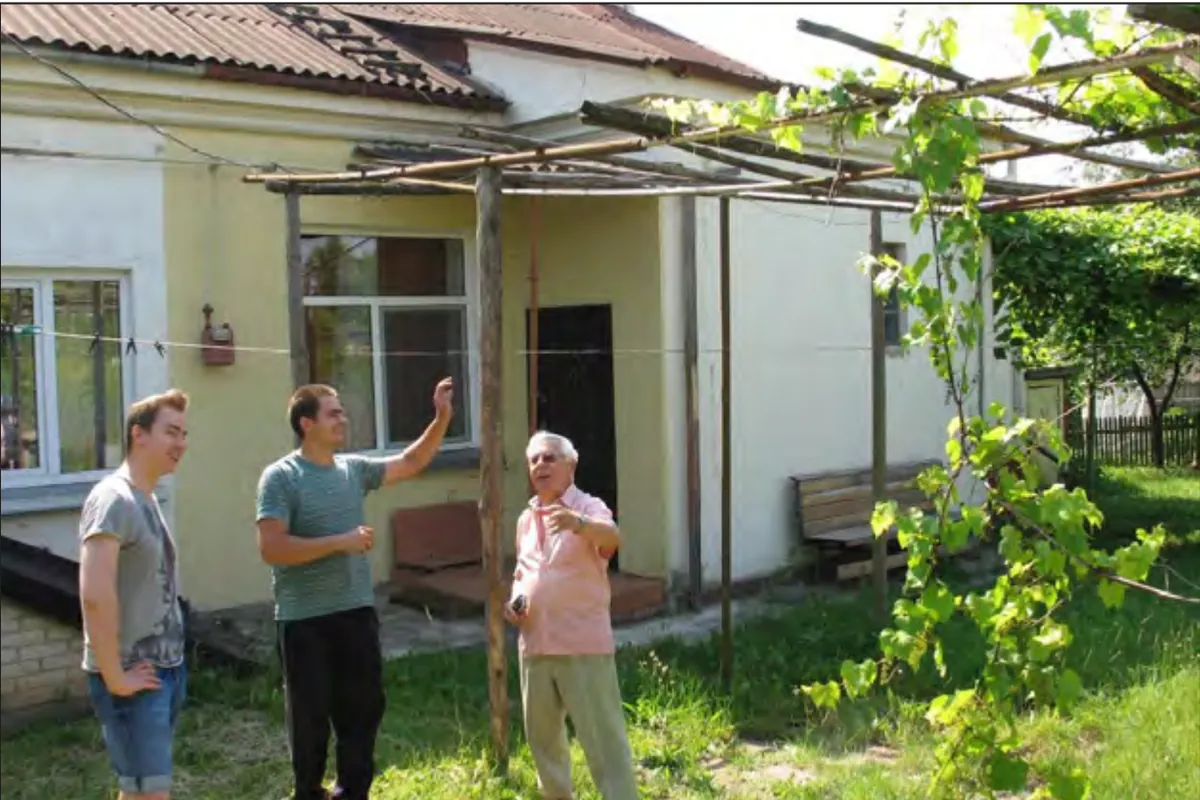
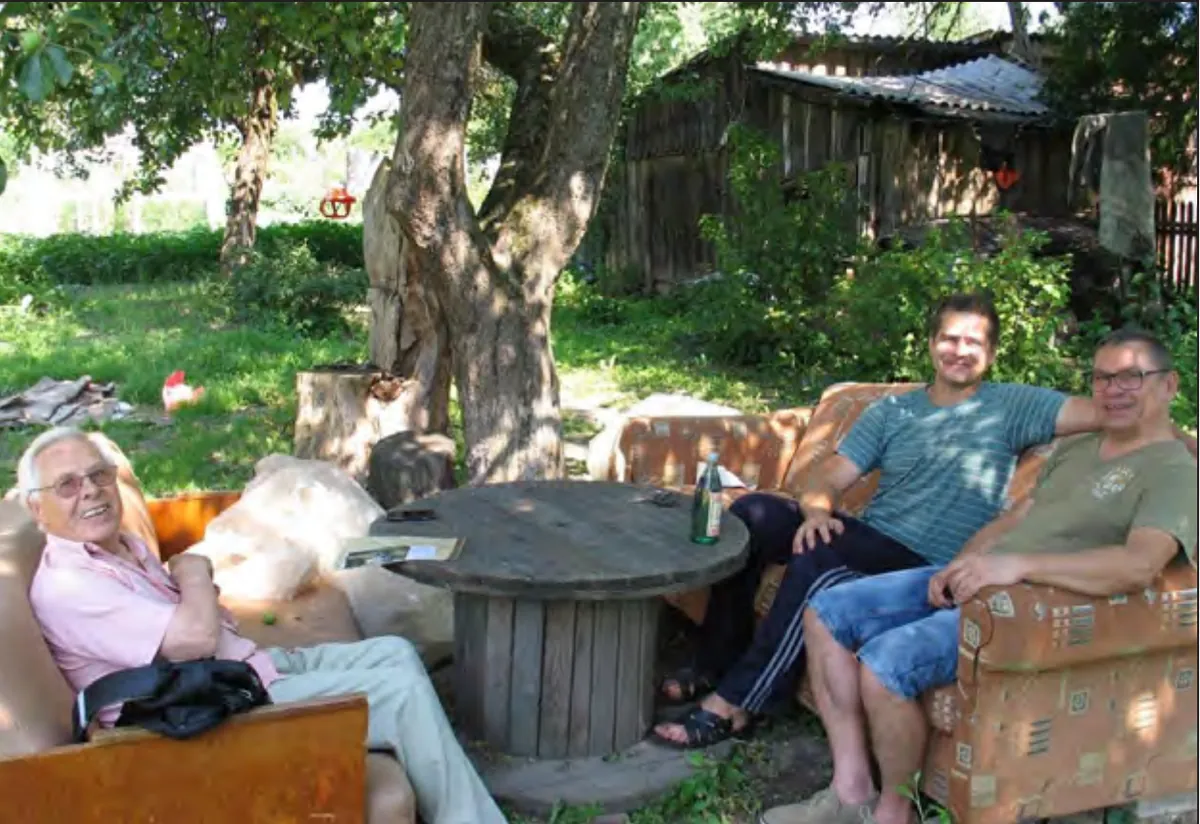
My second trip to Wołkowysk was in 2016. I went with my son Mariusz and my grandson Łukasz. We travelled by car and had very decent accommodation in a flat for short-term rent in an apartment block. We visited the area of the house at 5 Karczyzna Street. The house was in good condition, the façade had been renovated and a proper fence put up. We talked with two men living next door who spoke Polish and held the Karta Polaka (Pole's Card). We also went to 40 Wileńska Street (now Pervomayskaya Street) and to the Castle Forest. On Wileńska Street we called at the neighbouring house to visit my school friend, Władek Gabrowski. It turned out that we had come upon Zhenya Gabrowski, Władek's 28-year-old grandson, who was delighted to meet us. Zhenya told us that his grandfather Władek had died, and that he had inherited the old house with its large garden. The house was no longer fit to live in and now served as a dacha, a summer house. Most interesting of all was that Zhenya lived with his wife and daughter at 40 Wileńska Street, in our pre-war flat. It gave me great pleasure to be able to enter that flat seventy-six years after our deportation. However, Zhenya occupied only part of our flat, as it had been divided into two smaller units, and I had no opportunity to see the other part. Zhenya invited us for the evening to his dacha, where we spent a very pleasant time in the garden with a barbecue and Russian vodka. We spoke Russian, because Zhenya did not speak Polish.
The next day we went up Swedish Hill, from where there was a clear view of the whole town, whose population has grown from 17,000 before the war to 44,000 today. We also paid a visit to the secondary school where the language of instruction is Polish. It was a Sunday, but the deputy head was on duty at the school; she showed us round and gave us a lot of information. The school is housed in a modern building built in 1988 with a grant from the Polish government. We also visited the Polish cemetery, where participants in the January Uprising of 1863 and soldiers who fell in 1919–1920 are buried. The cemetery was well kept, and the insurgents and soldiers buried there had good headstones. Wołkowysk now has a large Polish community. Visiting Wołkowysk after so many years was an important event in my life.